

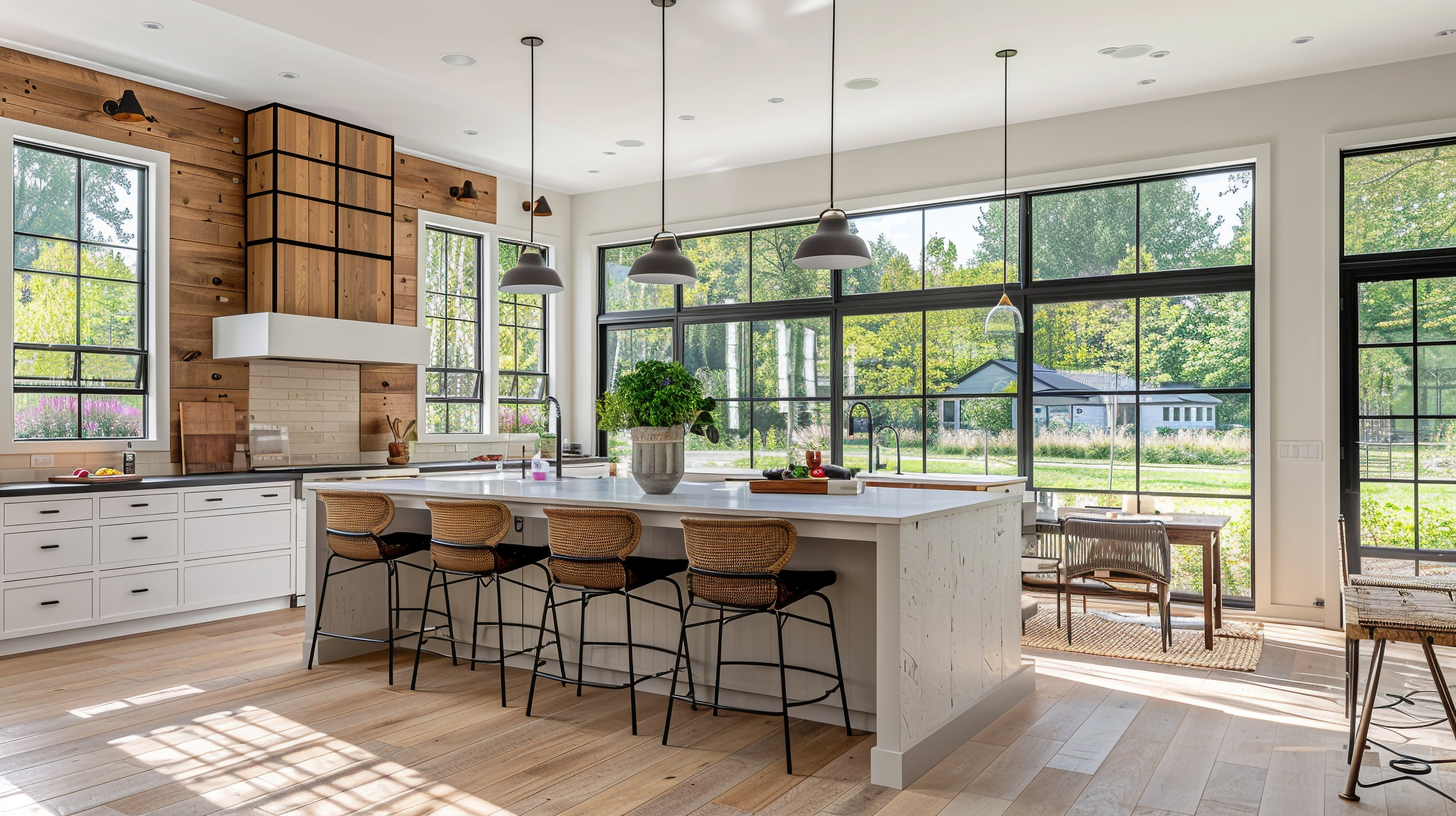
Hardwood flooring has long been associated with warmth, architectural elegance, and timeless appeal. In recent years, many Southwestern Ontario homeowners have begun extending hardwood directly into their kitchens to create a seamless, open-concept look throughout the entire main floor. While this design choice elevates both the aesthetic harmony and overall resale value of a home, it also introduces practical considerations that deserve careful evaluation.
Choosing hardwood for a kitchen isn’t a one-size-fits-all decision—it requires balancing design goals with an understanding of how your culinary space functions day to day. Whether you are updating an established neighborhood home in Guelph or renovating a country property in Puslinch, Elora, or Fergus, understanding how natural timber responds to kitchen activity ensures you make a confident, lasting choice for your family.
The Aesthetic and Comfort Advantages of Kitchen Hardwood
Few flooring options can match the authentic charm of natural wood. Its rich undertones, organic grain variations, and inviting warmth instantly make a kitchen feel more welcoming.
Creating Visual Flow Across Open Floor Plans
Many homeowners select hardwood because it unifies living rooms, hallways, and kitchen zones into one continuous visual layout. Eliminating harsh transition strips between rooms opens up sightlines, making main floors feel larger, brighter, and more cohesive. In historical properties throughout Guelph and Elora, extending hardwood into the kitchen respects the home’s original character while delivering a clean, modern update.
Superior Underfoot Comfort
Hardwood offers a noticeably softer and warmer underfoot feel compared to hard porcelain or ceramic tiles. For families who spend hours preparing meals, baking, or gathering around the kitchen island, this natural shock absorption reduces leg fatigue and creates a significantly more comfortable environment during cold Ontario winters.
Durability and Wear Realities in a Busy Kitchen
Durability is often the deciding factor when choosing materials for high-traffic areas. While hardwood is remarkably strong, kitchen environments present unique environmental stress tests.
Handling Everyday Moisture and Spills
Spills are inevitable in any active kitchen—from boiling pots and dropped ice cubes to sink splashes and pet water bowls. Hardwood copes easily with occasional, prompt cleanups. However, standing water left unaddressed can seep between plank seams, potentially causing surface discoloration, edge cupping, or swelling. Modern factory-applied polyurethane finishes offer impressive scratch and moisture resistance, but attentiveness remains essential.
Selecting the Right Wood Species
If your kitchen sees constant foot traffic, energetic pets, or busy appliance use, choosing a dense wood species is critical:
Hickory: Offers maximum impact resistance and bold graining that effortlessly masks everyday scuffs.
Hard Maple: Features a tight, uniform grain structure that resists abrasion while maintaining a light, modern aesthetic.
White Oak: Widely favored for its closed cellular structure, providing strong natural resistance to ambient humidity swings.
Essential Care Routines for Long-Term Performance
Maintaining hardwood in a kitchen is straightforward, but it requires consistent habits to keep the protective finish intact over the years.
Simple Protective Practices
Place Strategic Mats: Position absorbent, breathable accent mats directly in front of the sink, dishwasher, and refrigerator to catch stray water droplets.
Protect from Furniture Movement: Attach thick felt pads beneath kitchen chairs, barstools, and kitchen islands to prevent surface scratches when seating is shifted.
Clean Up Promptly: Keep a microfiber cloth handy to wipe up liquid spills as soon as they occur.
Use pH-Neutral Cleaners: Avoid harsh chemical cleaners, steam mops, or wax-based sprays that can dull or strip the top finish.
The Refinishing Advantage
One of hardwood's greatest advantages over alternative surfaces is its ability to be refinished. If your kitchen floor shows signs of wear after a decade of heavy use, you can sand and re-coat the surface rather than tear out the floor, completely renewing its appearance.
Making the Best Choice for Your Home
Choosing hardwood floors for your kitchen comes down to matching the material to your household’s daily routine. If maintaining continuous visual elegance across your main floor is your top priority and your family is comfortable with basic spill maintenance, hardwood delivers unmatched warmth, beauty, and long-term value. However, for households seeking 100% waterproof performance without routine care, modern luxury vinyl or waterproof laminate might offer greater peace of mind.
At Bigelow Flooring, our philosophy of "People Taking Care of People" means helping you navigate these options with complete transparency. We evaluate your layout, lifestyle, and local subfloor conditions to recommend the perfect floor for your home. To learn more about our customer-first philosophy and dedicated team, feel free to explore our About Us page.
Ready to find the ideal flooring foundation for your kitchen renovation? Our specialists are here to guide you through species selections, finish options, and professional installation. Visit our Location page to find directions to our Woodlawn Road West showroom in Guelph today, and let's bring your design vision to life.

