

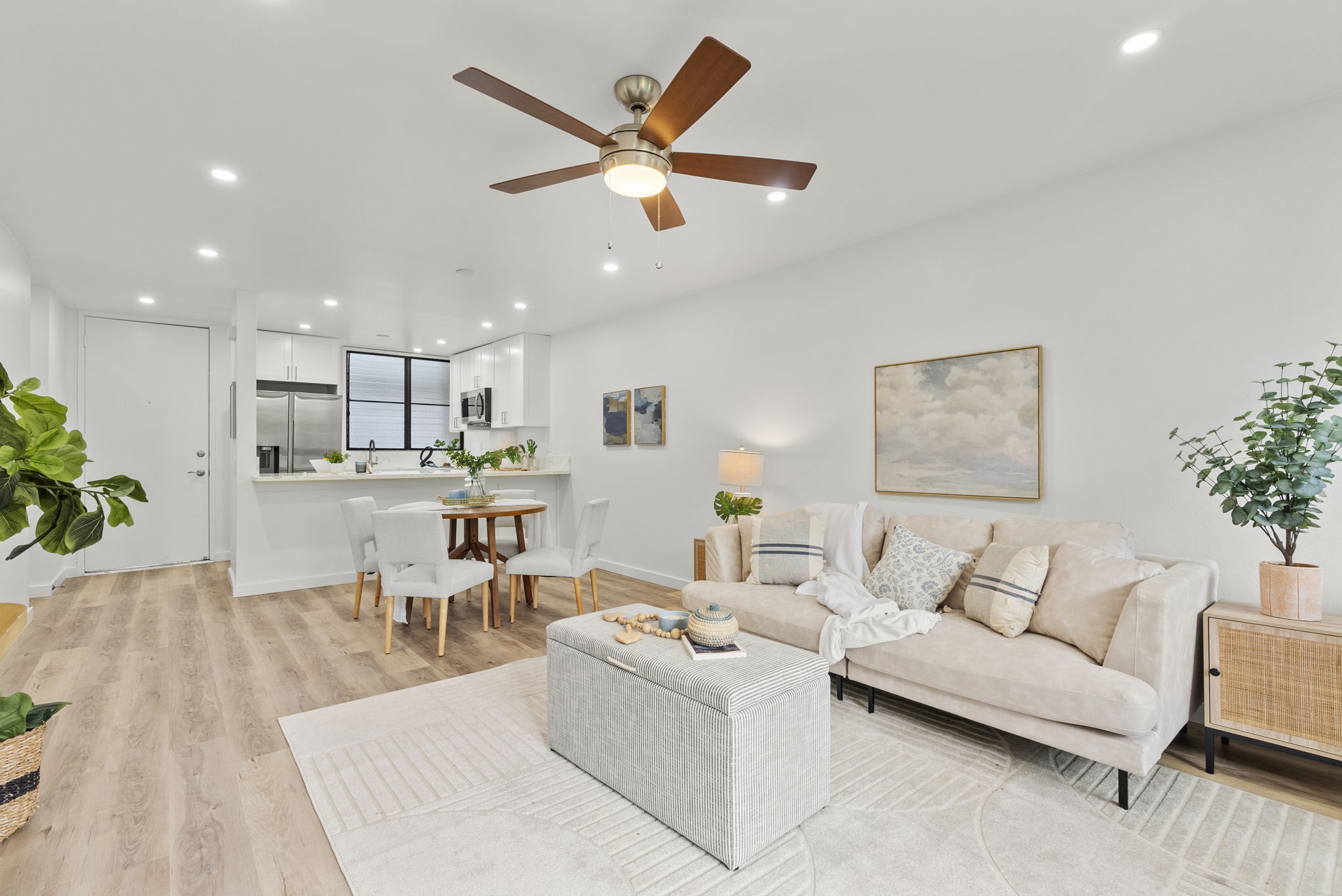
If you've started shopping for new floors, you've likely run into the same three contenders again and again: hardwood, laminate, and vinyl. Each has passionate fans, and each has genuine strengths. The right choice really comes down to your budget, your household, and how much maintenance you're willing to take on. Let's break down how these three popular flooring options actually compare.
Hardwood: The Timeless Classic
Hardwood flooring has been a staple in homes for generations, and for good reason. It brings natural warmth, rich grain patterns, and a sense of craftsmanship that's hard to replicate. Real wood also tends to increase resale value, since many buyers see hardwood as a premium feature.
The trade-off is cost and care. Hardwood is generally the most expensive of the three options, and it's sensitive to moisture, meaning it's not ideal for bathrooms, basements, or homes in humid climates without careful climate control. It can also scratch or dent from heavy furniture or active pets, though it can typically be sanded and refinished multiple times over its lifespan — a unique advantage over the other two materials.
Laminate: The Budget-Friendly Look-Alike
Laminate flooring uses a high-resolution image layer topped with a protective wear layer to mimic the look of wood, stone, or tile at a fraction of the cost. Modern laminate has come a long way — many products now feature realistic textures and embossing that make them hard to distinguish from real hardwood at a glance.
Laminate is durable against scratches and fading, and installation is often faster than solid hardwood, which can help reduce labour costs. The downside is moisture sensitivity; like hardwood, laminate isn't a great match for bathrooms or areas prone to spills, since water can seep into the seams and cause swelling.
Vinyl: The Waterproof All-Rounder
Luxury vinyl plank (LVP) and luxury vinyl tile (LVT) have exploded in popularity over the last several years, and it's easy to see why. Vinyl is fully waterproof, extremely durable, and available in an enormous range of styles — including highly realistic wood and stone visuals. It's an excellent choice for kitchens, bathrooms, basements, and busy households with kids or pets.
Vinyl also tends to feel softer and warmer underfoot than tile, and it's typically the most forgiving option when it comes to imperfect subfloors. The main consideration is that, unlike hardwood, it generally cannot be refinished — when it wears out, it needs to be replaced.
So, Which One Is Right for You?
Choose hardwood if you want long-term value, timeless style, and don't mind investing in upkeep.
Choose laminate if you want the wood look on a tighter budget and your space isn't prone to moisture.
Choose vinyl if waterproofing, durability, and low maintenance are top priorities.
Many homeowners actually mix materials — hardwood in main living areas, vinyl in bathrooms and basements — to get the best of every world.
Comparing flooring materials side by side is much easier when you can see and feel real samples rather than photos online. Our team has spent years helping homeowners weigh these exact trade-offs, and you can read more about our story and our approach to flooring to see why families trust us with their homes. When you're ready to explore samples in person, visit your nearest Bigelow Flooring location — our knowledgeable staff will help you land on the flooring that fits your life.

